

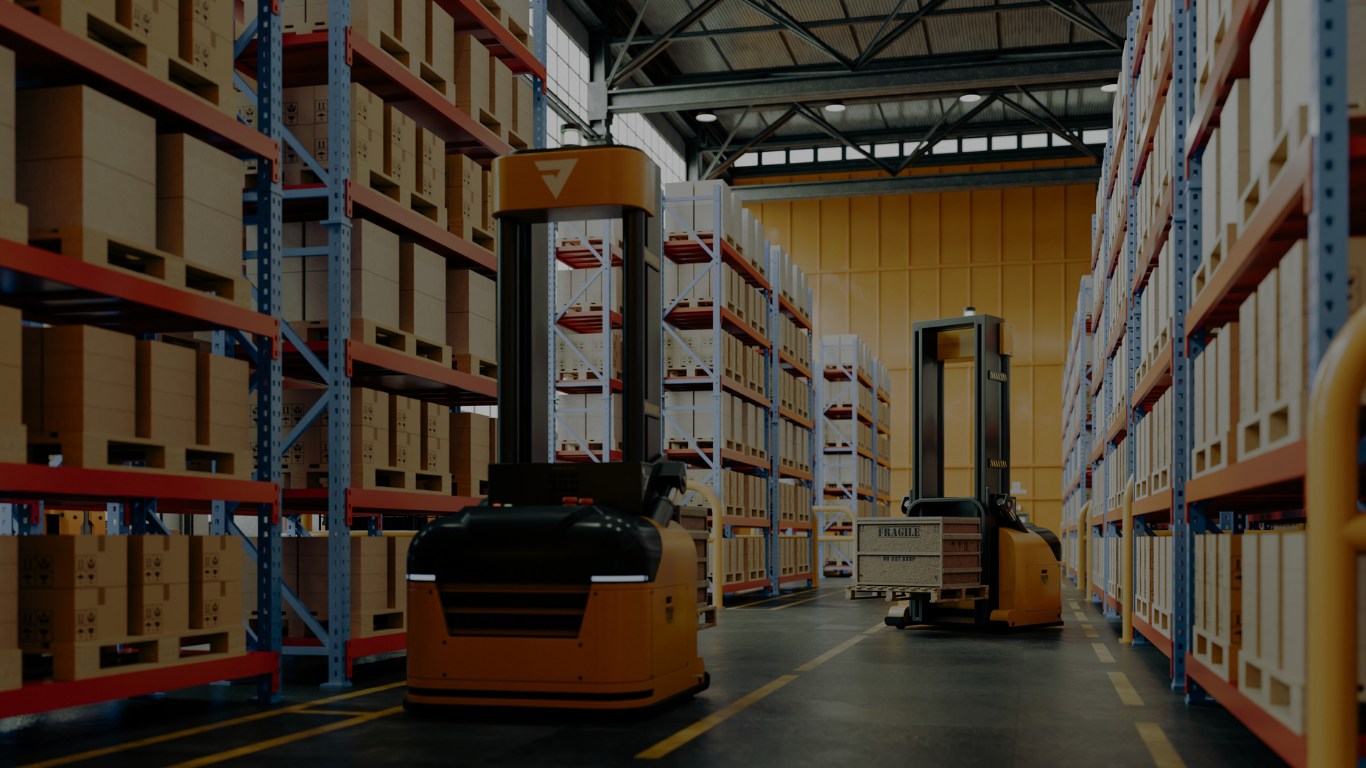
Warehouse automation is evolving rapidly, and 2026 is proving to be a pivotal year in pallet‑handling innovation. One technology leading this shift is the mobile pallet exchanger – a flexible, compact alternative to the traditional pallet inverter. Among these solutions, the Toppy Falcon Wings Splitter Mobile Pallet Changer stands out as a defining example of why operators across the UK and beyond are making the switch.
Versatility Beyond Traditional Inverters
Traditional pallet inverters are designed to rotate or flip a load – effective for stable, non‑delicate goods but unsuitable for fragile, non‑tipping or mixed SKU products. Mobile pallet exchangers like the Falcon Wings Splitter offer dual functionality:
- Pallet changing
- Layer splitting for mixed‑SKU handling
The Falcon Wings Splitter combines both operations in one machine, using extendable blades to stabilise loads while separating layers and transferring them safely to a new pallet.
This multifunctionality is a major reason companies are phasing out traditional inverters, which typically perform only one type of movement.
Safer Handling for Delicate and Unstable Loads
Many modern goods – from pharmaceuticals to bagged goods to consumer packaged items – cannot be tilted or inverted without risking damage. The Falcon Wings technology solves this problem with:
- Padded clamps that protect delicate products from lateral pressure
- Adjustable pressure to match load type
- A lifting method that avoids tipping or rotating entirely
Unlike inverters, which rely on rotating the entire load, the Falcon Wings system gently clamps the sides, lifts the product vertically, and supports it underneath via blades. This significantly reduces the risk of damage, particularly for products historically incompatible with inverter solutions.
Dramatic Throughput Improvements
A major driver for 2026 adoption is speed. Traditional pallet inverters typically max out at lower cycle rates due to their full rotation cycle, which also requires larger operating space.
By contrast, pallet exchangers offer:
- Up to 30 pallet exchanges per hour in the Mobile Falcon Wings Splitter
- Up to 40 pallets per hour for certain stationary Falcon Wings versions, such as the Falcon Wings – Stationary Pallet Changer
This makes them ideal for warehouses scaling up production or dealing with fluctuating seasonal demand.
No Fixed Installation or Structural Changes Required
Traditional inverters often require:
- A fixed location
- Anchoring to the floor
- Sufficient rotation clearance
- Safety fencing or guarding
Mobile pallet exchangers eliminate these limitations entirely.
The Falcon Wings mobile unit is:
- Fully electric and battery‑powered,
- Compact and easily manoeuvrable,
- Capable of operating without a dedicated installation area, ideal for warehouses with confined layouts.
This mobility is redefining how pallet changing fits into modern warehouse design – especially for facilities hesitant to invest in heavy infrastructure.
Intelligent Controls and Operator-Friendly Design
In 2026, mobile pallet changers embody the shift toward smart, ergonomic automation. The Falcon Wings Splitter includes:
- Intuitive joystick or tiller controls for easy operation
- Dual camera systems with onboard screens to guide precise blade insertion under the load
- Adjustable pressure controls accessible directly on the machine via gauge or selector
Traditional inverters rarely include integrated visual aids or such finely tuned pressure control, which limits their suitability for sensitive products.
True Multi‑Pallet Compatibility
Many industries now handle:
- Chep pallets
- Plastic pallets
- Wooden pallets
- Hygienic / cleanroom pallets
- Half pallets
Traditional pallet inverters sometimes struggle with heavily wrapped, uneven, or loose products.
The Falcon Wings exchanger is designed specifically for multi‑pallet adaptability, using extendable underside blades and lateral clamps to stabilise the load regardless of pallet material or size. It can work with a wide variety of products without requiring adjustments that a fixed inverter would need.
Reduced Maintenance and Higher Uptime
Mobile pallet exchangers have fewer moving parts than inversion equipment and avoid the high wear associated with rotating heavy loads.
The Falcon Wings is recognised for:
- Minimal maintenance requirements
- High durability
This higher uptime and lower servicing burden make mobile systems more appealing for continuous operations.
Ideal for Modern Automation Pathways
As warehouses implement semi‑autonomous and fully automated flows, mobile pallet exchangers fit seamlessly into mixed‑automation environments. Their flexibility allows integration alongside:
- AMRs/AGVs
- Conveyor‑fed pick areas
- Goods‑to‑person systems
- Hygienic or temperature‑controlled zones
Traditional inverters, being fixed machines, restrict automation design options.
Conclusion: 2026 Marks the Turning Point
The shift away from traditional pallet inverters isn’t a trend – it’s a transition driven by speed, safety, flexibility, and the need to handle increasingly diverse products. Mobile pallet exchangers, particularly the Toppy Falcon Wings Splitter, represent a new generation of pallet‑handling technology that delivers:
- Higher throughput
- Safer handling
- Greater versatility
- Lower infrastructure costs
- Better operator experience
- Future‑proof compatibility with modern warehouse layouts
For companies looking to modernise their operations in 2026, mobile pallet exchangers aren’t just an upgrade, they are quickly becoming the new industry standard.